Examining Regulatory Influences on RNG Certification Processes for Digital Wheel Games Across Jurisdictions
Clara Long · Sep 10, 2026
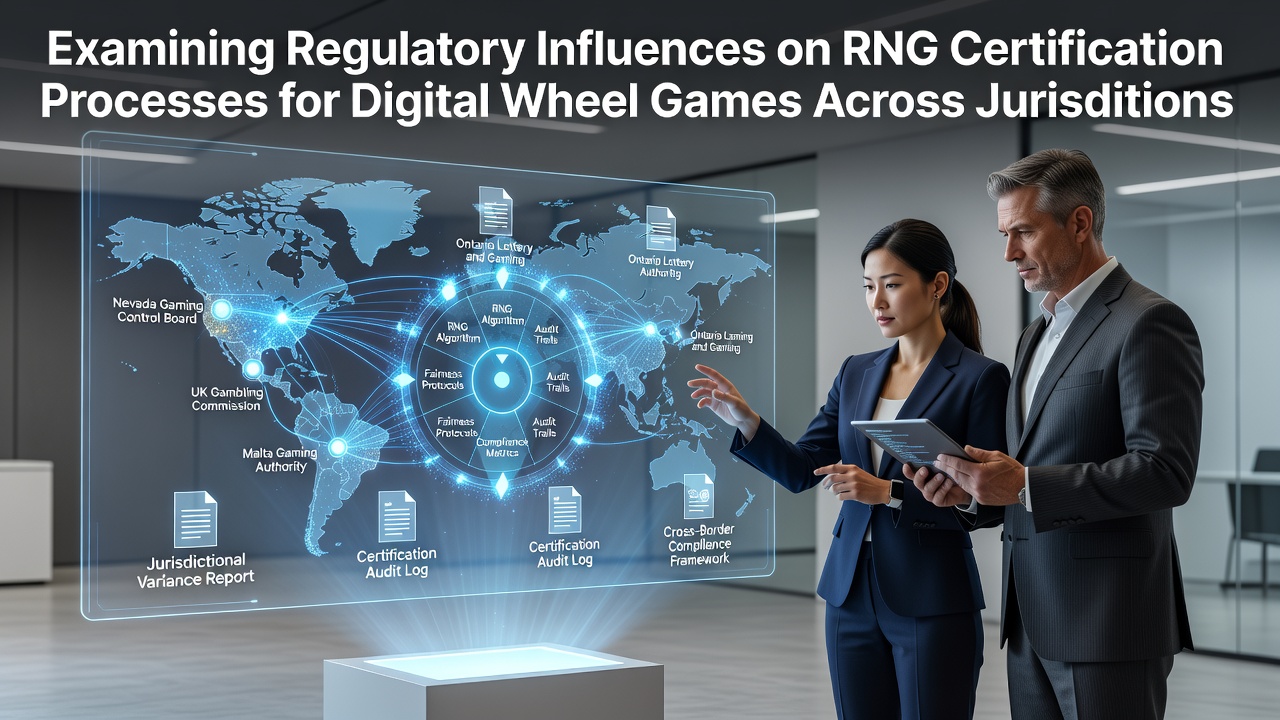
Examining Regulatory Influences on RNG Certification Processes for Digital Wheel Games Across Jurisdictions
Regulatory frameworks shape RNG certification for digital wheel games through layered requirements that vary by jurisdiction, with testing protocols, audit frequencies, and approval thresholds differing across North America, Europe, and Australia. Observers note that these processes rely on independent laboratories to verify statistical randomness, while government agencies enforce ongoing compliance through periodic re-evaluations and software updates.
North American Approaches to RNG Validation
Nevada maintains technical standards that require RNG outputs to pass chi-square and serial correlation tests at multiple confidence levels before certification, and the Nevada Gaming Control Board integrates these checks into broader system approvals for wheel-based titles. Data from regulatory filings shows that re-certification occurs whenever game logic changes exceed defined thresholds, which forces operators to submit modified code for fresh laboratory review. In contrast, Ontario's Alcohol and Gaming Commission applies similar statistical benchmarks yet adds requirements for source code escrow and real-time monitoring interfaces that transmit live outcome data to oversight servers.
Researchers at institutions studying gaming technology report that these dual layers create longer approval timelines in Canada compared with certain U.S. states, although both regions demand entropy sources remain unpredictable under simulated fault conditions. September 2026 marks the scheduled implementation date for updated entropy requirements in Ontario, which will align certain test suites more closely with Nevada protocols while retaining unique reporting obligations.
European and Australian Regulatory Patterns
Malta's Gaming Authority certifies RNG modules through a multi-stage process that includes both theoretical analysis and empirical testing across millions of simulated spins, then issues certificates valid for twelve months before mandatory renewal. Operators must also demonstrate that wheel game interfaces prevent any external influence on outcome generation, a step verified through hardware inspection and network segmentation audits. Australian regulators, operating under the framework administered by the Australian Communications and Media Authority, impose additional geographic restrictions that tie certification to licensed data centers located within national borders.

Those who have examined cross-border operations find that European certificates sometimes receive reciprocal recognition in Australian markets only after supplementary local testing confirms compliance with data residency rules. Figures released by industry testing firms indicate that roughly 15 percent of initial submissions fail first-round statistical audits in both regions, prompting iterative code revisions before final approval.
Common Technical Requirements and Laboratory Roles
Independent laboratories such as Gaming Laboratories International perform the core statistical evaluations using standardized batteries that include diehard, NIST, and custom wheel-specific distributions. Certification reports detail pass/fail criteria for each test, and regulators retain authority to request raw data sets for independent verification. Because wheel games generate outcomes through algorithmic mapping of RNG values to physical positions, laboratories also validate the fairness of mapping functions to ensure each pocket retains equal probability over large sample sizes.
According to documentation from the Nevada Gaming Control Board, any alteration to payout tables or animation sequences triggers a new certification cycle, even when the underlying RNG engine remains unchanged. Similar rules appear in Maltese guidelines, although the exact sample sizes required for re-testing differ by several million iterations.
Emerging Harmonization Efforts and Future Timelines
International bodies including the International Association of Gaming Regulators have hosted working groups that compare certification checklists across jurisdictions, seeking areas where mutual recognition could reduce redundant testing without lowering integrity standards. Early pilot programs have focused on shared test result formats rather than unified standards, allowing each regulator to retain final approval authority. Data compiled through these exchanges reveals that average certification duration ranges from six weeks in streamlined U.S. markets to fourteen weeks in jurisdictions requiring on-site inspections.
September 2026 also coincides with planned updates to several laboratory accreditation criteria that will incorporate quantum-resistant randomness tests, an adjustment driven by advances in computational capability. Regulators across multiple continents have signaled intent to adopt these enhanced suites, which will extend existing statistical protocols rather than replace them.
Conclusion
Jurisdictional differences in RNG certification continue to influence development cycles for digital wheel games, with each region balancing statistical rigor against operational efficiency. Laboratories serve as the primary verification mechanism, while government agencies enforce renewal schedules and supplementary controls. Ongoing harmonization discussions may gradually narrow procedural gaps, yet distinct local requirements remain the dominant factor shaping certification timelines through 2026 and beyond.